
22 Dicembre 2025
The Wall Street Journal
Carlo Stagnaro
Direttore Ricerche e Studi IBL
Argomenti / Ambiente e Energia
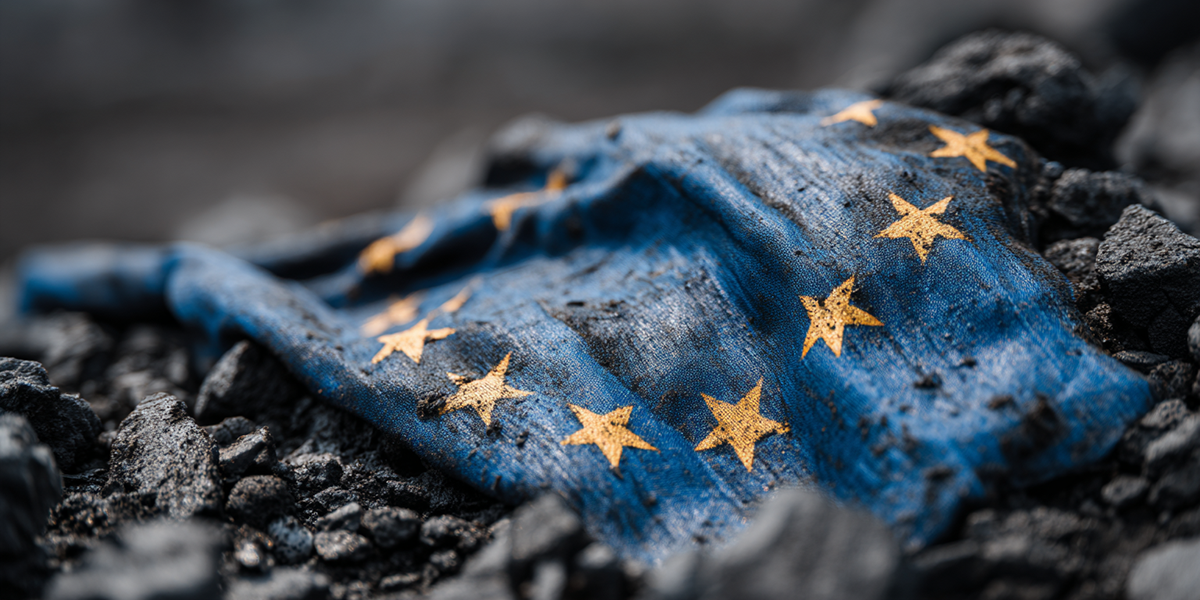
The European Union may establish a subsidy to offset a tariff meant to offset a tax. The European Commission, the bloc’s executive branch, recently announced a €600 million temporary fund to help domestic businesses cope with a new carbon border tax that will take effect in January. The fund is part of the Carbon Border Adjustment Mechanism, a tariff system conceived to protect European producers from foreign competitors that aren’t required to pay for the carbon emissions they generate.
CBAM will create as many problems as it addresses. During the transitional phase, 2023-25, importers of some carbon-intensive goods (cement, iron and steel, aluminum, fertilizers, electricity and hydrogen) were required to report the embedded emissions of their imports. Next year, they will pay a fee linked to the price of carbon allowances in the EU Emissions Trading System. The distribution of free allowances—set up to protect energy-intensive, trade-exposed industries from foreign competition—will be phased out.
According to the European Commission, the law is “a tool to put a fair price on carbon emitted during the production of carbon-intensive goods that are entering the EU, and to encourage cleaner industrial production in non-EU countries.” Who could object to leveling the playing field, improving environmental quality, and protecting the competitiveness of European producers? But the implementation is riddled with complexity.
Take its reporting requirements. The direct and indirect emissions of imported goods are difficult to estimate even in countries with strong, transparent reporting frameworks—never mind in places like China, where verification is nearly impossible. Yet importers are responsible for the accuracy of their submissions.
Such systems are also easy to game. When California introduced its cap-and-trade system and a carbon border fee on imported electricity, generators in neighboring states rerouted low-carbon electricity to California while sending carbon-intensive electricity elsewhere. Such “reshuffling” involved substantial paperwork and had no environmental benefit. Now imagine the scale of such opportunism when the trade involves the EU and China or India.
Even if gaming could be eliminated, the law would be seriously flawed. Applying only to certain carbon-intensive sectors, it raises prices to reflect the cost of embedded carbon and so creates a perverse incentive to outsource production of downstream goods. If the cost of EU-made cars or wind turbines rises because the law increases the price of steel, it may become cheaper to import finished cars or turbines. That wouldn’t prevent “carbon leakage”—the relocation of industrial activity to avoid regulation—but exacerbate it. The commission admitted the problem and extended the mechanism to such finished products as washing machines, industrial radiators and garden tools. But importers will need to assess the direct and indirect carbon content of every component.
There’s more. Even if the law successfully levels the playing field within Europe, many European firms rely heavily on exports. In the first three quarters of 2025, the EU recorded a trade surplus in goods of €104.3 billion, with extra-EU exports of €1,986.7 billion. These exporters will face higher domestic input costs for products under the law, and the announced fund, which is likely incompatible with trade rules under the World Trade Organization, is too small to do much good. The €600 million fund is supposed to offset a cost estimated to be around €1.4 billion. As a result, European producers may lose market share abroad to competitors in more carbon-intensive jurisdictions. Global emissions will rise, harming both Europe’s economy and the planet.
Economist James Bushnell noted when the debate over the Carbon Border Adjustment Mechanism began: “There is at least one instrument that avoids all of these problems. Strangely enough, that instrument is output-based allocation”—i.e., free allowances to carbon-intensive, trade-exposed industries—“the very tool being phased out by the EU in favor of CBAM.”
Europe’s carbon regime is also fueling international friction, as seen at the United Nations Climate Change Conference in late November. Instead of leading negotiations, the EU found itself criticized for intertwining climate and trade policy in ways that undermine trade, damage Europe’s economy and may increase global emissions.
The EU climate commissioner, Wopke Hoekstra, admitted that the Carbon Border Adjustment Mechanism was “too broad” and “too clunky.” Making it even broader and clunkier won’t help.
Carbon pricing is the most efficient tool to abate emissions; its pain may be alleviated by pragmatic fixes, such as recycling revenues to reduce other taxes or distributing free allowances to industries exposed to foreign competition. Economic historian Carlo Maria Cipolla defined stupidity as causing losses to others while gaining nothing. It’s time for Europe’s climate policies to become smarter.

